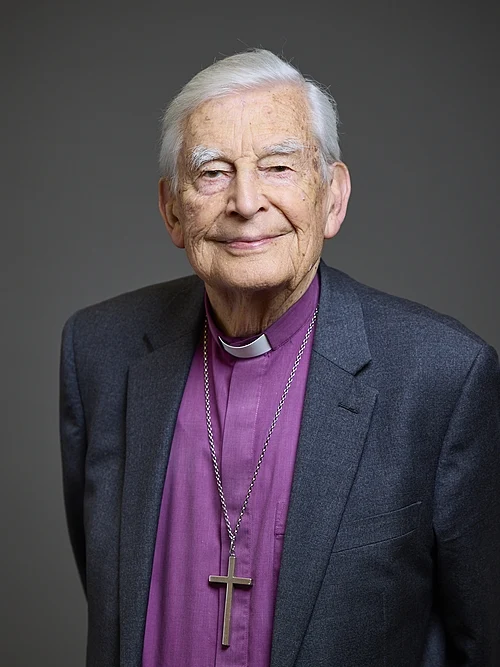
Richard Douglas Harries, a distinguished leader in the Church of England, theologian, author, and public intellectual, passed away on April 29, 2026, at the age of 89. Best known for his tenure as Bishop of Oxford from 1987 to 2006, Harries leaves behind a legacy marked by faith, scholarship, and a deep commitment to social justice and interfaith understanding.
Born on June 2, 1936, Harries was educated at Wellington College and the Royal Military Academy Sandhurst, beginning his career as an officer in the British Army’s Royal Corps of Signals. Though his military service was relatively brief, it laid a foundation of discipline and leadership that would shape his later work. He soon turned toward theology, studying at Selwyn College, Cambridge before training for ordination.
Ordained in the early 1960s, Harries began his ministry in London and quickly combined parish work with academic and chaplaincy roles. His early years included service at Hampstead St John and as a chaplain at Westfield College. He later became a tutor and then warden at theological colleges, before returning to parish ministry and eventually rising to become Dean of King’s College London.
In 1987, Harries was consecrated Bishop of Oxford at St Paul’s Cathedral, a role he held for nearly two decades. During his episcopacy, he became known for his thoughtful leadership, liberal theological perspective, and advocacy for ethical responsibility in both church and public life. In 1993, he took a seat in the House of Lords as a Lord Spiritual, contributing to national debates on ethics, social policy, and religion.
Following his retirement in 2006, Harries was created a life peer as Baron Harries of Pentregarth, continuing his work in the House of Lords as a crossbench member. He remained active in intellectual and public discourse, later serving as Gresham Professor of Divinity from 2008 to 2012.
Throughout his life, Harries was deeply engaged in interfaith dialogue and ethical issues. He played a key role in founding the Oxford Abrahamic Group and chaired the Council of Christians and Jews. His work also extended into bioethics, where he contributed to discussions on medical and scientific advancements as a member of the Nuffield Council on Bioethics.
An accomplished author, Harries wrote more than 25 books exploring the relationship between Christianity, culture, ethics, and the arts. His works, including Art and the Beauty of God and The Passion in Art, reflected his belief that faith and creativity were deeply intertwined.
Remembered as a thoughtful theologian and compassionate leader, Harries championed social justice, supported the homeless, and encouraged dialogue across religious and cultural divides. His legacy endures through his writings, his public service, and the many lives he influenced through faith and intellect.